
Axenova · Industrial LoRaWAN networks
LoRaWAN to measure what your plant can't see today.
We design and install LoRaWAN networks to measure energy, water, gas and equipment condition, on an open platform where your data stays yours. If you need it, we can also operate the network under contract.
The problem
The points no cable ever reaches.
Every plant has consumption, levels and vibration that go unmonitored. Not because they don't matter, but because wiring them costs more than they're worth.
LoRaWAN reaches those points with battery-powered sensors, without pulling cable or touching the PLC (programmable logic controller).
The hard part isn't the sensor: it's making the network work in a real plant, with steel, electrical noise and a firewall in the way.
A well-designed LoRaWAN network is easy to forget. A poorly designed one becomes a support problem.
What LoRaWAN is
Long range, low power, small data.
LoRaWAN (Long Range Wide Area Network) is a radio protocol designed for sensors that send short messages from time to time, run on batteries and are spread across a large or hard-to-reach site.
A good fit when
- You need to measure many scattered points with little data per point.
- Running cable is expensive, slow or requires stopping operations.
- Devices must run on batteries for long periods.
- There are obstacles, distances or areas without a data network.
Not a good fit when
- You need high-frequency data (for example, continuous waveforms).
- You require real-time control or safety loops.
- You need to transmit large volumes, such as images or video.
In those cases we recommend a different technology, and we tell you so during the site survey.
| Criterion | LoRaWAN | Wired | Wi-Fi | Cellular |
|---|---|---|---|---|
| Range | Long, depending on environment and configuration | Limited by cabling | Short | Depends on carrier coverage |
| Sensor power use | Very low (battery) | Cable-powered | High | Medium to high |
| Data volume | Low | High | High | Medium to high |
| Installation cost per point | Low | High | Medium | Medium, plus subscription |
| Real time | No | Yes | Partial | Partial |
Qualitative comparison. Range and battery life depend on environment, device and configuration; they are verified on each site.
What we measure
Six fronts, one network.
A well-designed network supports many kinds of sensors. These are the areas we work in.
Utilities
Water, gas and LPG
Pulse-output meters and native LoRaWAN meters. Ultrasonic level sensing in tanks.
Industrial
Process data
Instruments and process variables that don't reach any system today.
Energy
Consumption and demand
Per line, panel or machine, using current transformers or Rogowski coils.
Maintenance
Equipment condition
Vibration and temperature on motors, pumps and rotating equipment.
Buildings
Building management
Energy, occupancy and comfort, with lighting and HVAC actuators.
Custom
Custom projects
Specific sensors, codecs (message decoders) and integrations.
How we work
First we measure the site. Then we design the network.
01 —
On-site coverage survey
We measure radio propagation in your actual plant, with its steel and its noise.
02 —
Network design
Gateway and antenna placement, plus the regional frequency plan.
03 —
Device selection and testing
We choose devices for each application and test them before installation.
04 —
Installation and commissioning
Mounting, configuration and verification of every point.
05 —
Data integration
Data arrives decoded in your dashboards and systems.
06 —
Operations and support
Network monitoring and incident handling, under contract.
Possible deliverables, depending on the project
- Coverage report
- Network design
- Bill of materials
- Configuration
- Acceptance tests
- Documentation
Open platform
Your data, in your systems.
Data flows out over MQTT (a lightweight messaging protocol) to wherever you need it, without getting locked into a vendor's cloud.
- Sensor
- Gateway
- LoRaWAN network server
- MQTT
- Time-series database
- Dashboards / your system
Reference stack
- ChirpStack
- MQTT
- InfluxDB
- Node-RED
- Grafana
Open components
We build on widely used open-source tools that can run on your infrastructure or the cloud of your choice.
Custom codecs
When a device has no decoder available, we write one.
Integrations
We connect to SCADA, historians and ERP systems as the project requires.
Hardware
Devices from multiple manufacturers, tested before installation.
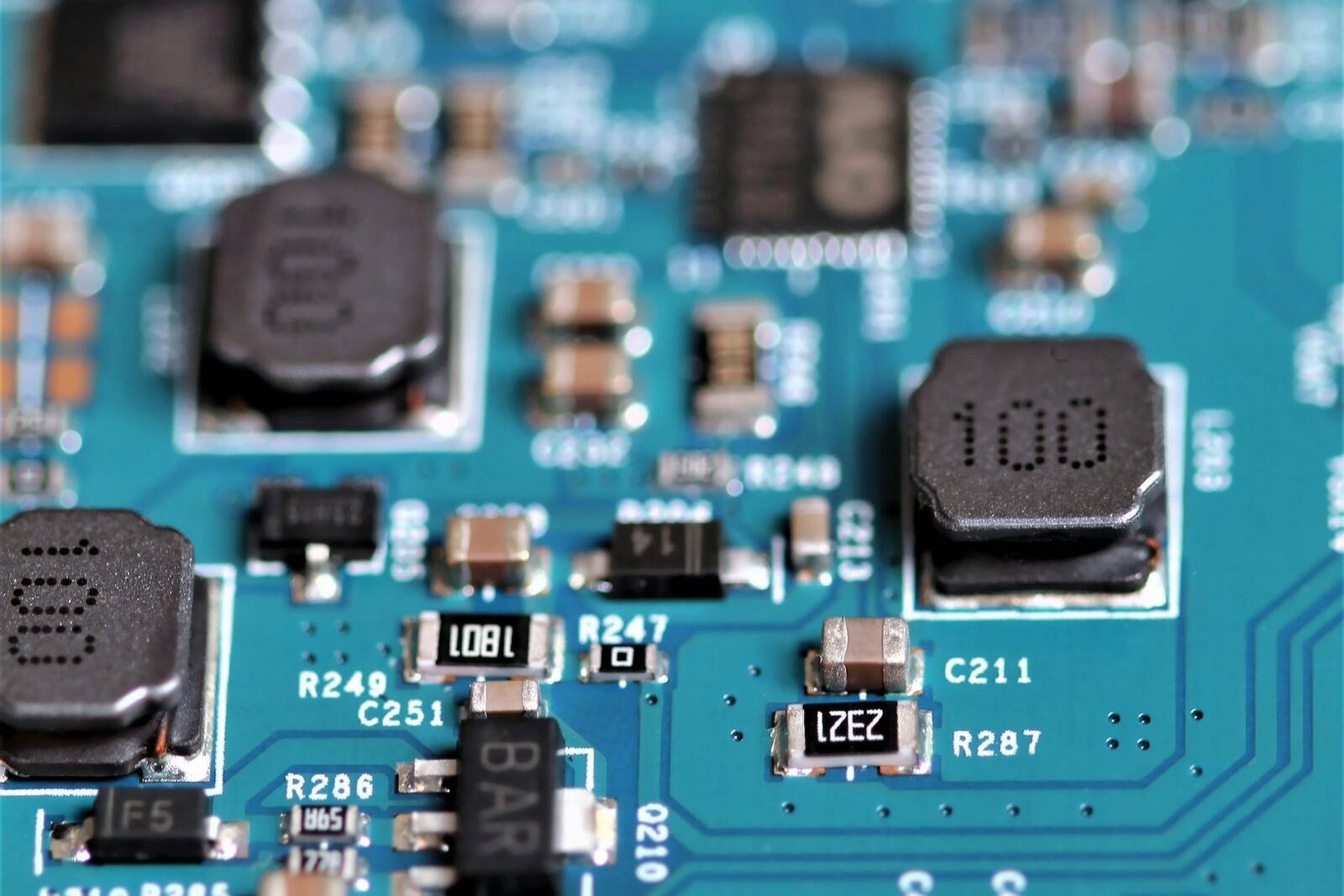
We don't tie your project to one brand. We select gateways and sensors by application, environment and availability, and bench-test them before they go to the field.
See products at LoRaWAN StoreUse cases
Typical application scenarios.
- Illustrative example
Branch network
Energy, occupancy and environmental monitoring across a network of locations, consolidated in a single dashboard.
- Illustrative example
Elevator telemetry
Elevator status reported over LoRaWAN and integrated with maintenance dispatch.
- Illustrative example
Environmental monitoring at an agro-industrial plant
Temperature and humidity in processing and storage areas. Monitoring provides data; it does not by itself certify compliance.
Software
Need decisions, not just data?
When a project calls for software to analyze data and manage operations, we work together with Actentis.
Explore Actentis softwareRemote sites
No terrestrial coverage?
For remote sites, we combine LoRaWAN with satellite connectivity.
Learn about Axenova satellite connectivityFAQ
Questions we often hear.
Contact
Discuss a LoRaWAN project
Tell us what you need to measure. You don't need a fully defined project.